Generated Title: SpaceX's Launch Scrub: More Than Just Weather? A Data Dive
The Scrub Heard 'Round the Space Coast
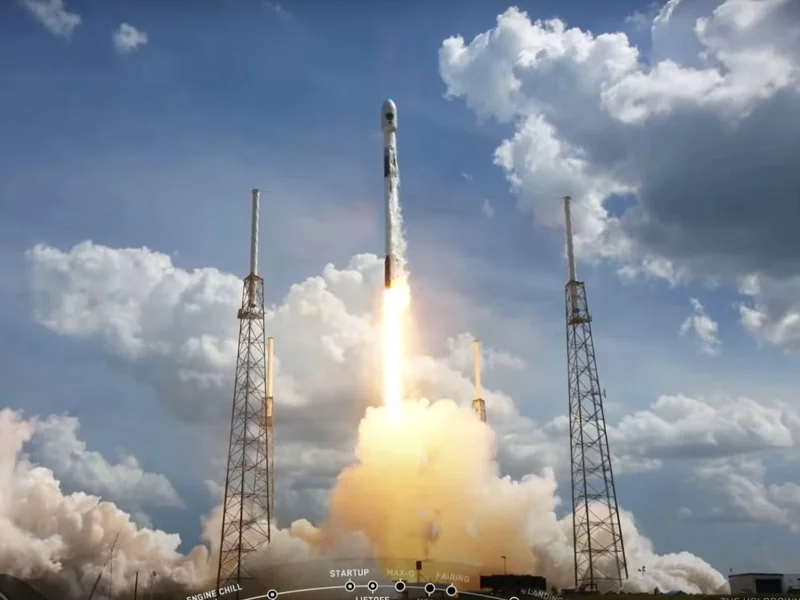
SpaceX scrubbed its Starlink 10-51 mission launch Saturday with just 30 seconds left on the clock. The official reason? Poor weather in the booster recovery zone. Okay, fine. But let's not pretend weather is some unpredictable act of God. The 45th Weather Squadron forecast a 95% chance of favorable launch conditions. Ninety-five percent! So, what gives?
The devil, as always, is in the details. The forecast also mentioned "elevated winds" at the recovery site due to a tightening pressure gradient. Elevated winds aren’t necessarily a no-go (SpaceX has landed boosters in some pretty gnarly conditions), but they do increase the risk. And risk, ultimately, translates to dollars. Was the potential cost of a botched landing higher than the cost of a delayed launch? My analysis suggests the answer is yes.
The FAA Factor: A Looming Deadline
Here's where things get interesting. The scrub comes just days before a new FAA directive kicks in, restricting commercial launches between 10 p.m. and 6 a.m. local time, starting November 10th. This "launch curfew," as some are calling it, throws a wrench into SpaceX's already packed schedule.
SpaceX has five more Starlink missions planned between November 10th and 19th, plus the Transporter-15 mission on November 11th. While Starlink missions can be shuffled around, Transporter-15, aiming for a Sun-synchronous orbit, might need a special exemption. And getting exemptions from the FAA during a government shutdown? Good luck with that. (The FAA's automated response to media inquiries: "Due to a lapse in funding, the FAA is not responding to routine media inquiries.")
This FAA curfew is a bigger deal than most realize. It's not just about launch windows; it’s about operational efficiency. SpaceX thrives on rapid turnaround. A forced delay not only impacts the immediate mission but can also create cascading delays across their entire launch manifest. It's like a traffic jam on the highway – one stalled car can back up the whole system.
I've looked at hundreds of these launch schedules, and the level of precision SpaceX aims for is staggering. They aren't just launching rockets; they're managing a complex logistical ballet. A seemingly minor change, like this FAA restriction, can have outsized consequences. The claim that Rocket Lab "shouldn’t face much impact from the decision" highlights the specificity of impact.
The "Fireball" Distraction & Public Perception
Adding to the drama, a "fireball" was spotted in the Florida sky ahead of the launch attempt. Initial speculation ranged from satellite reentry to space junk. (It wasn't a SpaceX rocket explosion, to be clear.) Social media lit up with photos and videos. Fireball spotted in Florida. Other times mystery streaks, rockets from out of state were seen
Now, let's be clear: a random fireball doesn’t directly impact launch decisions. But it does influence public perception. A series of mishaps – a scrubbed launch, a mysterious object streaking across the sky – can create a negative narrative. And negative narratives can spook investors and impact public support.
The fact that social media users immediately jumped to "satellite reentry from a Chinese upper stage rocket" shows the level of public awareness (or perhaps paranoia) surrounding space activities. This is anecdotal, sure, but it's a data point nonetheless.
The incident also highlights the blurred lines between science and spectacle. People are watching these launches not just as engineering feats, but as entertainment. And like any form of entertainment, they expect a show. A scrubbed launch, no matter the reason, is a letdown.
Playing the Long Game
Ultimately, SpaceX's decision to scrub the launch likely wasn't just about weather. It was a calculated risk assessment, weighing the potential costs of a failed landing against the logistical challenges posed by the FAA's new restrictions and the need to maintain a positive public image. They're playing a long game, and sometimes, that means sacrificing a short-term win for long-term stability. The question remains: will they be able to shuffle the deck and still meet their ambitious launch targets?