Google's Project Suncatcher: Are We Witnessing the Dawn of Space-Based AI?
Google's got a new moonshot, and this one's aimed way beyond the moon. We're talking about Project Suncatcher: AI datacenters in space. Yes, you read that right. They're planning to launch constellations of satellites, each packed with enough processing power to make your jaw drop, and powered by the sun itself. Now, I know what you might be thinking: "That sounds like science fiction!" But trust me, this is very real, and the implications are absolutely mind-blowing.
Why Space? Why Now?
Let's break this down. Why would Google, a company known for its earthbound dominance, even consider something so…out there? Well, the answer is simple: AI is hungry. It devours processing power like a starving beast, and the demand is only going to skyrocket. Major tech companies are projected to spend trillions on datacenters in the coming years. Trillions! And all those datacenters need land, water for cooling, and, most importantly, energy.
But here's the kicker: space offers a solution to all of these problems. Solar panels in orbit can be up to eight times more productive than on Earth. Think about that for a second. Eight times the energy, practically unlimited real estate, and minimal impact on our planet's precious resources. It's like finding a cheat code for the future of AI.
Google plans to launch two prototype satellites by early 2027 to test their hardware in orbit. This isn't just a pipe dream; they're actively laying the groundwork for a future where AI isn't limited by terrestrial constraints. According to Google plans to put datacentres in space to meet demand for AI, this initiative is driven by the increasing demand for AI processing power.
Of course, there are challenges. Thermal management in space is no walk in the park. Neither is maintaining high-bandwidth communications with Earth. And let's not forget the ever-present risk of cosmic radiation frying your circuits. But Google isn't shying away from these hurdles. They're tackling them head-on, driven by a vision of a future where AI can truly reach its full potential.
And they aren’t alone. Elon Musk is also planning to scale up to create datacenters in space, and Nvidia AI chips are slated to launch into space this month in partnership with Starcloud.
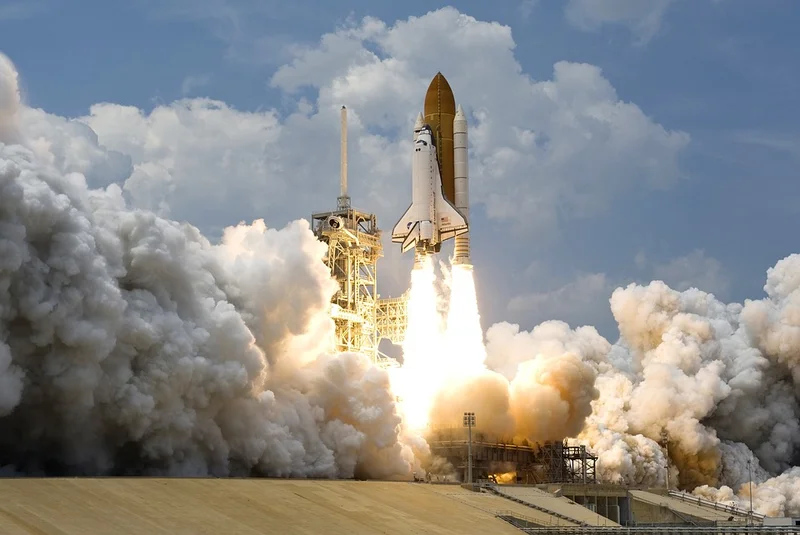
This reminds me of the early days of the internet. People scoffed at the idea of connecting computers across the globe, calling it a waste of time and resources. But look at us now. The internet has revolutionized every aspect of our lives, and I believe space-based AI has the potential to do the same, or even more. This is the kind of breakthrough that reminds me why I got into this field in the first place.
Now, I know some people are worried about the environmental impact of launching rockets into space. And those concerns are valid. Each launch does emit hundreds of tons of CO2. But here's the thing: Philip Johnston, co-founder of Starcloud, argues that the carbon dioxide savings over the life of a space-based datacenter could be ten times greater compared to powering one terrestrially.
This isn't just about efficiency; it's about sustainability. It's about finding a way to power the AI revolution without sacrificing our planet in the process. But what about those astronomers worried about satellites cluttering up our view of the cosmos? That’s a legitimate concern, and it's crucial that we find ways to minimize the impact of these satellites on astronomical observations. Perhaps we need to invest in better tracking and avoidance technologies, or explore the possibility of launching datacenters into higher orbits.
The potential is HUGE, but so is the responsibility.
The question is, what does this all mean for us? What happens when AI has access to virtually unlimited processing power and energy? What new breakthroughs will be unlocked? Will we finally be able to solve some of humanity's greatest challenges, from climate change to disease? It's almost too much to imagine.