Navigating November's Social Security Maze: Why Your Payment Might Feel Different This Month
November is upon us, and for millions of Americans, that means the arrival of crucial Social Security and Supplemental Security Income (SSI) payments. But if you’re one of those relying on these benefits, this month might feel a little… off. There’s a distinct possibility your payment schedule is either subtly altered or, in the case of SSI, seemingly absent, thanks to a confluence of administrative shifts and calendar quirks. As someone who’s spent years dissecting the mechanics of financial flows, I can tell you these aren't just minor adjustments; they represent friction points in a system designed for precision, yet often experienced with confusion.
We’re less than two months out from the next cost-of-living adjustment, a small comfort perhaps, but before we even get there, recipients have had to contend with a significant, mandated change: the federal government's shift from paper checks to electronic payments. President Trump's executive order, with its hard compliance deadline of September 30, effectively herded the last holdouts into direct deposit or onto a Direct Express card. While the stated goal was efficiency and cost reduction (and the data likely supports that on a macro level), I've looked at hundreds of these policy shifts, and the implementation often reveals more about the bureaucracy than the stated benefits. It forces a segment of the population, often those least equipped to adapt quickly, into a new technological paradigm. What's the actual, granular data on how many recipients genuinely struggled with that Sept. 30 deadline, and what support mechanisms were truly effective beyond a simple FAQ? The official line focuses on compliance, but the human cost of that transition, the small anxieties and logistical hurdles, rarely makes it into the quarterly reports.
The Curious Case of the Missing SSI Check
Now, if you're an SSI recipient, you might be staring at your bank statement this November and scratching your head. You'd be forgiven for thinking something went wrong, perhaps even linking it to the ongoing government shutdown that began October 1. Let's be clear: the shutdown, which has indeed furloughed hundreds of thousands of federal employees (including many at the SSA), does not impact Social Security or SSI payments. These are mandatory spending programs, insulated from congressional funding lapses. Imagine the quiet hum of an empty federal building, the staff furloughed, yet the automated systems relentlessly processing these vital payments, a testament to their mandatory nature.
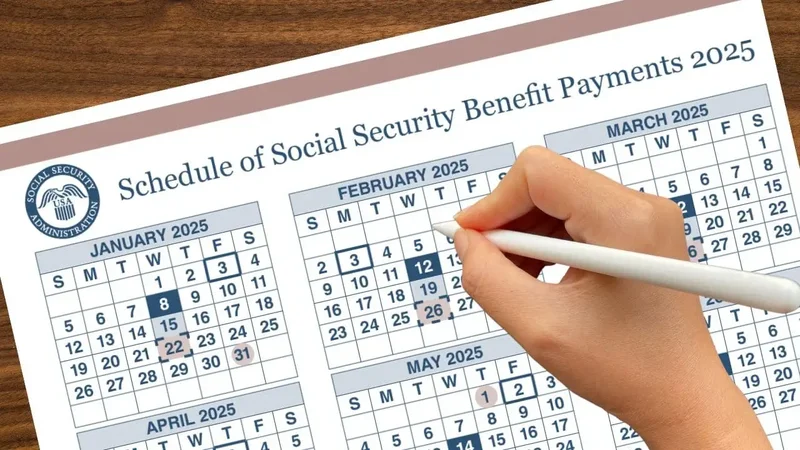
The real reason for the "missing" November SSI payment is far more mundane, yet just as impactful: a calendar quirk. November 1, 2025, fell on a Saturday. When that happens, the Social Security Administration, operating like a complex financial algorithm with a hidden "weekend adjustment" variable, simply issues the payment on the preceding business day. So, your November SSI payment was actually deposited on Friday, October 31. It appears as if November has no payment—to be more exact, the November 2025 payment was disbursed on October 31, 2025. You still receive 12 payments in the year; they just don't always align neatly with the calendar month they're technically "for." This pattern repeats, as we’ll see with the December 31 payment covering January 2026, and January 30, 2026, covering February. It’s a logistical optimization, yes, but one that can easily throw off personal budgeting for those who rely on a consistent monthly arrival.
Decoding Your November Payout
For those receiving regular Social Security benefits (retirement or disability), your payments are arriving in November, but they follow a staggered schedule based on your birth date. This week, specifically Wednesday, November 12, marks the payout for beneficiaries born between the 1st and 10th day of their birth month. If your birthday falls between the 11th and 20th, expect your payment on the third Wednesday of the month (November 19). And for those born after the 20th, the fourth Wednesday (November 26) is your day.
There's also that specific carve-out for those who started receiving Social Security before May 1997. This group, often the oldest beneficiaries, still receives payments on the third day of the month (November 3 this year, as the 1st and 2nd were a weekend). It makes you wonder about the historical data that led to this complex, segmented payment schedule. Was it about load balancing on payment systems from a bygone era, or a legacy system that was never fully streamlined? Beyond the administrative convenience, does this staggered schedule actually introduce more confusion than it prevents for recipients trying to budget their monthly income? It’s a classic example of a system optimized for its own internal logic, sometimes at the expense of user clarity. If your payment doesn't show up as expected, the SSA advises waiting three mailing days before calling them directly at 1-800-772-1213.
The Unseen Friction of Financial Engineering
The data is clear: the money is moving. But the narrative around these payments isn't just about the numbers; it's about the friction introduced by administrative design. From the executive order mandating electronic payments, pushing a potentially vulnerable demographic into a new system, to the cyclical calendar quirks that make SSI payments seem to vanish, these are not neutral events. They require adaptation, understanding, and often, a little bit of anxiety for the recipient. My analysis suggests that while these systems are engineered for efficiency, the human interface often bears the brunt of the "optimization." It’s a reminder that even the most precise financial mechanisms can create real-world ripples that extend far beyond the balance sheet.